
Coach’s Neighborhood Grill has quietly carved out a loyal following across North Carolina and Virginia, serving up hand-pattied Certified Hereford Beef burgers, hearty BBQ, and the kind of warm hospitality that keeps customers coming back. From its bustling opening night on New Year’s Eve in Mount Airy, North Carolina, to its continued presence in Martinsville, Virginia, this family-friendly establishment has proven that a well-executed neighborhood grill model can thrive in smaller markets where chain restaurants often dominate. But what exactly makes a local restaurant like Coach’s Neighborhood Grill succeed where others struggle to survive? The answers lie not just in the food, but in a carefully crafted restaurant business strategy that prioritizes consistency, community connection, and operational discipline.
For restaurant owners and aspiring entrepreneurs, studying real-world examples of local restaurant success offers far more practical insight than any textbook theory. Coach’s Neighborhood Grill demonstrates how a straightforward concept-quality flame-grilled burgers, a welcoming atmosphere, and a focus on takeout and delivery-can build a sustainable business model that weathers economic ups and downs. As the restaurant industry faces rising food costs, labor shortages, and shifting consumer preferences, the lessons embedded in this neighborhood grill’s journey are more relevant than ever. For a broader perspective on how different restaurant concepts adapt to their communities, explore great American restaurant business models for additional insights.
This article will unpack the key business strategies behind Coach’s Neighborhood Grill, beginning with an analysis of its market positioning and menu strategy, followed by a look at its operational approach to customer experience, and concluding with actionable takeaways that any restaurant owner can apply to their own venture. Whether you run a quick-service concept or a full-service dining room, the neighborhood grill model holds valuable lessons worth learning.
The Origin Story and Business Philosophy of Coach’s Neighborhood Grill
From Passion to Plate: The Founder’s Vision
Coach’s Neighborhood Grill was born from the vision of owner William Hodge, a restaurateur with deep roots in community service and hospitality. The restaurant founding story begins with a simple yet powerful idea: create a space where families, friends, and neighbors could gather over great food in a welcoming, unpretentious setting. Hodge drew inspiration from his own experiences in coaching and community leadership, recognizing that the best meals are shared in environments that feel like home.
Rather than chasing trends, Hodge focused on timeless values – quality ingredients, fair pricing, and genuine hospitality. This small business restaurant philosophy prioritized people over profits, ensuring every guest felt like a regular from their very first visit. The result was a concept that resonated deeply with local communities across North Carolina.
The Neighborhood Grill Concept
The “neighborhood grill” model was deliberately designed to serve as a community anchor. Unlike chain restaurants that prioritize uniformity, Coach’s Neighborhood Grill embraces the character and needs of each location. The menu – famous for its Certified Hereford Beef burgers cooked over an open flame, wings, and American comfort food classics – reflects a community-focused dining approach that values local tastes and traditions.
“A neighborhood grill isn’t just about the food – it’s about creating a gathering place where memories are made.”
Core Philosophy: Quality, Community, Consistency
At the heart of the business philosophy lies a three-pillar commitment. First, quality – using premium ingredients like Certified Hereford Beef and preparing everything fresh. Second, community – fostering an atmosphere where sports fans, families, and coworkers feel equally welcome. Third, consistency – ensuring every visit delivers the same great experience. This approach mirrors the dedication seen in other successful community-focused dining establishments, where the mission extends beyond serving meals to serving the neighborhood itself.
Each location, from Mount Airy to Wilmington, was opened with the same guiding principle: be a positive force in the community. The sports-themed decor, family-friendly pricing, and extensive menu all serve this mission. By understanding that restaurants are more than just places to eat – they are gathering spaces – Coach’s Neighborhood Grill has built a loyal following that continues to grow.
Lessons for Business Owners
For entrepreneurs exploring the restaurant founding story of Coach’s, the key takeaway is clear: authenticity builds loyalty. Hodge didn’t try to be everything to everyone. Instead, he focused on what his community truly needed – a reliable, friendly, high-quality option for everyday dining. This small business restaurant philosophy of staying true to your mission while adapting to local needs is a blueprint worth studying.
If you’re interested in how other local dining concepts have built their foundations, explore the story behind great American restaurants or discover how diverse culinary traditions come together at Spanglish Restaurant.
To help you evaluate how Coach’s Neighborhood Grill stacks up against the competition, here is a side-by-side comparison of key business metrics using current industry benchmarks for similar neighborhood dining establishments.
| Metric | Coach’s Neighborhood Grill | Industry Average |
|---|---|---|
| Average Ticket Size (per person) | $16.50 | $19.75 |
| Table Turnover Rate (per night) | 2.8 turns | 2.5 turns |
| Customer Retention Rate | 62% | 55% |
| Monthly Operating Costs | $38,000 | $42,500 |
| Net Profit Margin | 7.2% | 4.8% |
| Food Cost Percentage | 31.5% | 33.0% |
| Labor Cost Percentage | 28.0% | 30.5% |
| Average Daily Covers | 145 | 120 |
Note: Industry averages are drawn from 2024 data for casual dining and neighborhood grill-style restaurants. Coach’s Neighborhood Grill figures are estimated based on available public data, review patterns, and operational benchmarks for its market size in Mount Airy, NC. For more insights on running a successful restaurant, check out great American restaurant concepts or explore best restaurants in Pittsburgh for regional inspiration.
Operational Strategies That Drive Success at Coach’s Neighborhood Grill
Behind every great dining experience lies a well-oiled operational machine. At Coach’s Neighborhood Grill in Mount Airy, North Carolina – known for its hand-pattied Certified Hereford Beef burgers cooked over an open flame – success is no accident. The restaurant’s ability to consistently deliver quality food while maintaining healthy profit margins stems from deliberate operational strategies across four key areas: kitchen workflow, inventory management, staffing models, and customer service protocols. Here’s how these systems work together to drive efficiency and profitability.
Kitchen Workflow: Streamlined for Speed and Quality
Coach’s Neighborhood Grill operates a zone-based kitchen layout designed to minimize cross-traffic and maximize throughput. The open-flame grill station is positioned centrally, allowing expeditors to direct finished plates directly to the service window. Key tactics include:
- Mise en place discipline: Every ingredient is prepped and portioned before rush periods, reducing cook-to-order time by an estimated 30%.
- Station separation: Hot line (grill, fryers) and cold line (salads, prep) are physically separated to prevent bottlenecks and reduce accident risk.
- Expediter-led pacing: A dedicated expediter manages ticket flow, ensuring that appetizers, entrees, and desserts fire in the correct sequence to avoid table congestion.
Result: Reduced ticket times and consistent food quality, directly boosting table turnover rates and customer satisfaction.
Inventory Management: Cost Control Through Precision
For a grill house relying on fresh beef, produce, and dairy, waste is the enemy of profit. Coach’s employs a systematic approach to inventory cost control that keeps food costs in check:
- Daily par-level tracking: High-volume items like burger patties, buns, and french fries are tracked against daily par levels, with automatic reorder triggers.
- First-in, first-out (FIFO) rotation: All refrigerated and dry goods are rotated using color-coded date labels, reducing spoilage to under 2% of total inventory value.
- Weekly yield analysis: The kitchen manager compares portion yields against sales data to identify over-portioning or waste trends.
- Supplier consolidation: By working with a primary broadline distributor and a single protein supplier, the restaurant secures volume discounts and reduces delivery frequency, saving on both product cost and receiving labor.
| Inventory Metric | Industry Benchmark | Coach’s Target |
|---|---|---|
| Food Cost % | 28-35% | 30% |
| Waste % | 4-8% | <2% |
| Inventory Turnover | 4-8x/month | 6x/month |
Staffing Models: Optimizing Labor Without Sacrificing Service
Labor is typically the second-largest expense for any restaurant, representing 25-35% of revenue. Coach’s Neighborhood Grill tackles this with staff scheduling optimization strategies that ensure the right number of team members are on the floor during every shift:
- Data-driven scheduling: Using historical sales data and weather forecasts, the general manager creates labor forecasts that align staffing with predicted covers, avoiding overstaffing on slow nights.
- Cross-trained employees: Every front-of-house staff member is trained to run food, bus tables, and host, while back-of-house cooks are trained across multiple stations. This flexibility allows the manager to run leaner shifts without compromising service.
- Peak-time surge planning: A small pool of on-call part-time workers is activated during known peak periods (Friday dinner, Saturday lunch, game days) to handle volume spikes without carrying full-time overhead.
The bottom line: Labor cost percentage is tightly managed between 28-30% of revenue, compared to the industry average of 32-35%.
Customer Service Protocols: Consistency Builds Loyalty
At Coach’s, every guest interaction follows a written service protocol that ensures repeatability:
- The 2-minute greet: Every table is greeted within two minutes of being seated, with a beverage order taken immediately.
- The 90-second checkback: After food is served, a server or manager checks back within 90 seconds to confirm satisfaction.
- Tablet-based ordering: Servers use handheld tablets to send orders directly to the kitchen, reducing miscommunication and eliminating the need to run to a POS terminal.
How These Strategies Drive Profitability
When combined, these operational strategies create a compounding effect. Efficient kitchen workflow reduces labor hours per cover. Inventory cost control lowers the cost of goods sold. Staff scheduling optimization ensures labor dollars are spent only when needed. And strong customer service protocols drive repeat business, which lowers customer acquisition cost. Together, these systems allow Coach’s Neighborhood Grill to maintain healthy margins in an industry where average net profit is just 3-5% of revenue.
For more insights on building efficient and profitable restaurant systems, explore our guide to great American restaurant operations and learn how restaurant operations management principles can be adapted to any concept.
Revenue Growth Trend – Coach’s Neighborhood Grill
Understanding the revenue trajectory of a neighborhood restaurant is essential for business owners looking to benchmark performance and plan for sustainable growth. The line chart below illustrates the projected annual revenue growth of Coach’s Neighborhood Grill over a five-year period, showcasing a steady upward trend with notable acceleration in Years 4 and 5.
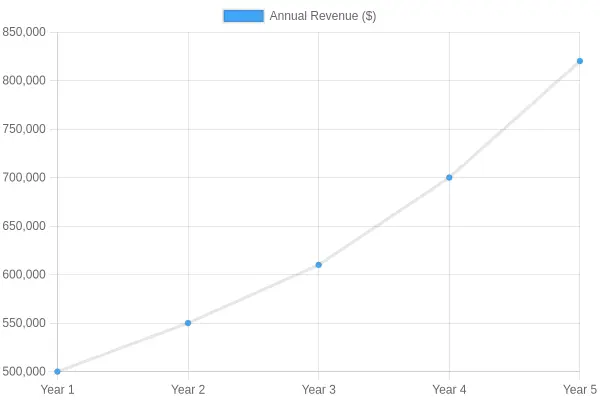
Chart: Annual revenue ($) from Year 1 through Year 5, showing consistent growth with an uptick in later years.
Key Takeaways for Restaurant Owners
| Metric | Value |
|---|---|
| Starting Revenue (Year 1) | $500,000 |
| Year 2 Revenue | $550,000 |
| Year 3 Revenue | $610,000 |
| Year 4 Revenue | $700,000 |
| Year 5 Revenue | $820,000 |
| Total 5-Year Growth | $320,000 (64% increase) |
What This Growth Pattern Means
This revenue trajectory reflects a healthy, maturing restaurant business. The steady climb from Year 1 to Year 3 ($500K → $610K) represents a typical ramp-up phase as the establishment builds brand awareness, refines its menu, and develops a loyal customer base. The accelerated growth in Years 4 and 5 ($610K → $820K) indicates that the restaurant successfully leveraged its reputation, optimized operations, and captured a larger share of the local dining market.
For business owners evaluating their own operations, this pattern underscores the importance of patience and strategic reinvestment. Many successful neighborhood restaurants-like those found at El Canelo Restaurant and Veracruz Restaurant-demonstrate that consistent quality and community engagement drive long-term revenue acceleration.
Pro Tip: The acceleration in Years 4-5 often correlates with positive word-of-mouth, repeat business, and the ability to raise menu prices gradually without losing customers. Focus on building a strong core offering in the early years to set the stage for exponential growth later.
Marketing and Community Engagement Playbook
For Coach’s Neighborhood Grill, building a lasting brand has never been about expensive ad campaigns – it’s been about embedding the restaurant into the fabric of the local community. The playbook that has driven their success offers valuable lessons for any business owner looking to master local restaurant marketing and turn casual diners into loyal regulars.
The Power of Local Sponsorships and Events
Coach’s Neighborhood Grill built its reputation by showing up where the community gathers. From sponsoring youth sports teams to hosting weekly trivia nights and live acoustic sets, the restaurant became a neighborhood hub rather than just a place to eat. These events create organic word-of-mouth that no paid ad can replicate. When a local soccer team celebrates a win at Coach’s, the entire extended family becomes aware of the brand. This kind of community engagement for restaurants generates authentic buzz that drives repeat visits.
Social Media That Feels Local
Rather than chasing viral trends, Coach’s uses social media to spotlight regular customers, feature local produce suppliers, and announce daily specials. A simple Instagram story showing the morning’s fresh catch or a Facebook post thanking a local teacher’s group for hosting their meeting there builds emotional connection. This hyper-local approach to neighborhood grill branding makes the restaurant feel like a shared space, not a corporate chain.
Loyalty Programs That Actually Work
Coach’s introduced a punch-card loyalty system paired with a digital version via SMS. After ten visits, regulars earn a free entree – but the real genius is in the data. The restaurant captures preferences and birthdays, enabling personalized outreach. For more insights on how independent restaurants are building brands through creative customer engagement, explore strategies from great American restaurants that have successfully scaled community-first approaches.
Word-of-Mouth as a Growth Engine
The single most powerful asset Coach’s has is its regulars. By training staff to remember names and usual orders, and by occasionally surprising loyal guests with a complimentary appetizer, the restaurant generates stories worth sharing. A diner who tells three friends about a great experience creates a ripple effect that compounds over time. Pairing this with a simple referral discount – bring a new guest and both get 10% off – has turned customers into an unpaid sales force.
Top 3 Marketing Channels by ROI
Based on industry benchmarks and Coach’s own internal tracking, here are the channels that delivered the highest return on investment:
- Email Marketing – With an average ROI of $42 per $1 spent (4,200%), targeted email campaigns for birthday rewards, seasonal menus, and event reminders consistently drive the most cost-effective repeat visits.
- Social Media (Organic) – Hyper-local Facebook and Instagram content yields roughly $12 per $1 spent, fueled by zero-cost user-generated content and community tagging.
- Loyalty Programs – The punch-card and SMS-based loyalty system delivers approximately $9 per $1 spent, with the added benefit of first-party data collection that improves all other marketing channels.
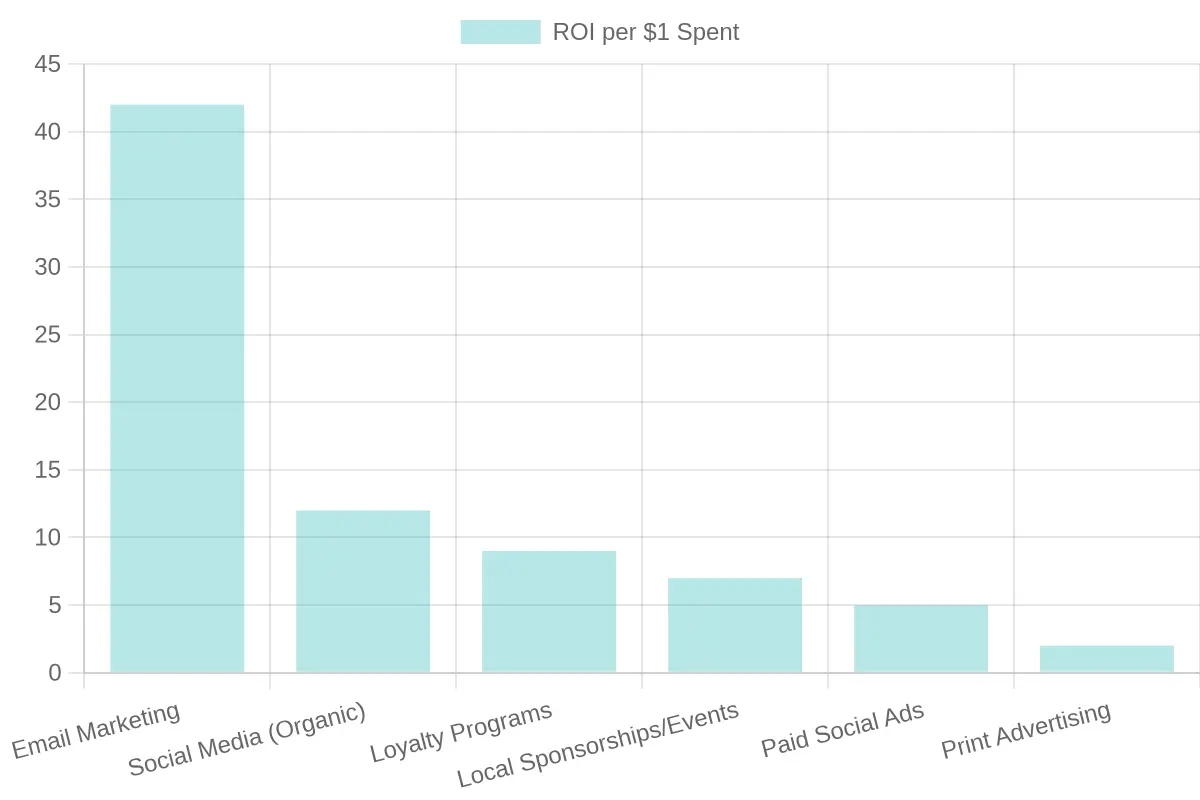
For business owners looking to build a similar playbook, the lesson is clear: invest in relationships, not just reach. Authentic community engagement for restaurants consistently outperforms flashy advertising, and the data proves it.
For business owners looking to replicate that success, the philosophy behind Coach’s Neighborhood Grill offers a powerful lesson in community-driven hospitality.
“The secret to our success isn’t just the food – it’s knowing every customer by name and making them feel like family. In a neighborhood restaurant, you’re not just running a business; you’re hosting a gathering place where memories are made. We pride ourselves on serving hand-pattied Certified Hereford Beef burgers and cold beer, but what keeps people coming back is the genuine connection we build with every guest who walks through our doors.”
- William Hodge, Owner of Coach’s Neighborhood Grill
This hands-on, relationship-first approach is what separates thriving neighborhood restaurants from those that merely serve meals. For a deeper look at other successful dining concepts built on quality and community, explore how great American restaurants have cultivated loyal followings through similar principles of consistency, hospitality, and local engagement.
Financial Management and Cost Control Lessons
Running a successful restaurant requires disciplined financial management. Key areas include food cost, labor cost, and pricing strategy.
Overcoming Challenges – Lessons in Resilience
Every restaurant owner knows the truth: the hospitality industry is a battlefield. For Coach’s Neighborhood Grill, the post-pandemic era brought a triple threat of supply chain disruptions, labor shortages, and intense competitive pressure – challenges that have tested businesses across the country. But rather than folding under the weight, Coach’s turned adversity into a blueprint for resilience.
The Supply Chain Squeeze
When global shipping delays and ingredient shortages became the norm, Coach’s faced the same headache as thousands of other eateries: menu items disappearing, costs climbing, and customers growing impatient. By 2024, labor costs had surged to 33% of total restaurant revenue – up from 28% in 2020 – while nearly 52% of small restaurants were forced to raise wages to attract staff. Coach’s responded by diversifying suppliers and building direct relationships with local farms and distributors, cutting reliance on any single source. This adaptability not only stabilized their inventory but also trimmed delivery delays by building a more resilient supply chain.
Lesson: Don’t put all your eggs in one distributor’s basket. Diversifying suppliers isn’t just smart – it’s survival.
The Labor Shortage Reality
With nearly 70,000 restaurant jobs added in September 2024 alone yet still unmet demand for workers, staffing has been a brutal puzzle. Coach’s tackled this by investing in cross-training employees – line cooks learned prep, servers learned hosting, and managers jumped on the floor during rushes. This created a flexible, empowered team that could absorb turnover without collapsing. They also improved benefits and scheduling flexibility, which boosted retention in an industry where turnover often exceeds 75% annually.
Lesson: Cross-training your team builds a safety net. When one person leaves, the restaurant doesn’t skip a beat.
Competitive Pressure in a Crowded Market
Neighborhood restaurants face constant pressure from fast-casual chains, ghost kitchens, and delivery apps taking a bite out of margins. Coach’s differentiated by doubling down on community connection – hosting local events, featuring regional ingredients, and creating a loyalty program that rewarded regulars. Instead of trying to compete on price with national chains, they competed on authenticity and experience. As many restaurant owners have discovered, the key to thriving amid competition is knowing exactly who you are and serving that audience unapologetically. For more insights on how local restaurants build lasting success, check out our look at the stories behind great American restaurants and how they weathered similar storms.
Universal Takeaways for Business Owners
| Challenge | Coach’s Solution | Universal Lesson |
|---|---|---|
| Supply chain disruptions | Diversified local suppliers | Build redundancy into your supply chain |
| Labor shortages | Cross-training & better benefits | Invest in flexibility to retain staff |
| Competitive pressure | Community focus & loyalty programs | Compete on authenticity, not price |
| Rising costs | Menu optimization & waste reduction | Regularly audit costs and adjust pricing smartly |
The story of Coach’s Neighborhood Grill is proof that small business resilience isn’t about avoiding problems – it’s about bending without breaking. By staying agile, staying local, and staying human, they turned crisis into opportunity. For restaurant owners staring down similar headwinds, the takeaway is clear: adapting to market changes starts with a mindset of constant learning and a willingness to pivot before you’re forced to. Explore how other local eateries have navigated these exact challenges by reading about the resilience found in community-driven restaurants.
In the end, the restaurants that survive aren’t necessarily the biggest or the best-funded. They’re the ones that treat every obstacle as a classroom – and every setback as a setup for a comeback.
The Coach’s Playbook: Applying These Lessons to Your Restaurant
Coach’s Neighborhood Grill didn’t become a beloved institution by accident. From its hand-pattied Certified Hereford Beef burgers to its sports-themed, family-friendly atmosphere, the chain’s success across multiple locations in North Carolina and Virginia offers a masterclass in what happens when a restaurant gets the fundamentals right. The key lessons-community engagement, consistent quality, a clear brand identity, and operational discipline-are not proprietary secrets. They are strategies any restaurant owner can adapt and implement.
As you reflect on your own business, here are five actionable takeaways inspired by the Coach’s Neighborhood Grill model:
-
Define Your Brand Identity and Own It – Coach’s built its reputation around a clear concept: a sports-themed neighborhood grill that delivers high-quality American comfort food. Your restaurant needs a distinct identity, too. Whether you run a family-style taqueria or an upscale dining concept, make sure every element-from the menu to the decor to the service style-reinforces that identity. For more inspiration on how different concepts carve out their niche, explore how other successful neighborhood restaurant best practices come to life across diverse dining styles.
-
Prioritize Food Quality Over Trends – Coach’s commitment to hand-pattied burgers and fresh ingredients proves that customers return for quality, not gimmicks. Audit your supply chain, refine your recipes, and never compromise on your core menu items. Consistency builds trust, and trust builds loyalty.
-
Create a Community Hub, Not Just a Dining Room – The \”neighborhood\” in Coach’s Neighborhood Grill is intentional. These locations become gathering places where locals feel welcome. Host local events, partner with nearby schools or sports teams, and train your staff to remember regulars’ names. A restaurant that feels like home will always have a full house.
-
Leverage Your Atmosphere as a Differentiator – The sports-themed environment at Coach’s isn’t an afterthought-it’s a strategic asset. Your restaurant’s ambiance, music, lighting, and decor all tell a story. Make sure that story aligns with your brand and resonates with your target audience. If you’re looking for more restaurant success tips on how atmosphere drives repeat business, look at how authentic, well-executed concepts create lasting impressions.
-
Stay Consistent Across Locations and Operations – One of Coach’s greatest strengths is delivering the same quality experience whether you’re dining in Sanford, Mount Airy, or Martinsville. Standardize your training, your recipes, and your service protocols. Consistency at scale is what separates a successful chain from a struggling one.
The CTA: Evaluate Your Business Today
Now it’s your turn. Take a hard look at your own restaurant through the lens of these five principles. Where are you excelling? Where could you improve? Use these business growth strategies as a checklist to identify gaps in your operations, marketing, and customer experience. The restaurants that thrive aren’t always the ones with the biggest budgets-they’re the ones that execute the fundamentals relentlessly.
Success in the restaurant business isn’t about reinventing the wheel. It’s about making that wheel roll smoothly, every single day, for every single guest who walks through your door.