
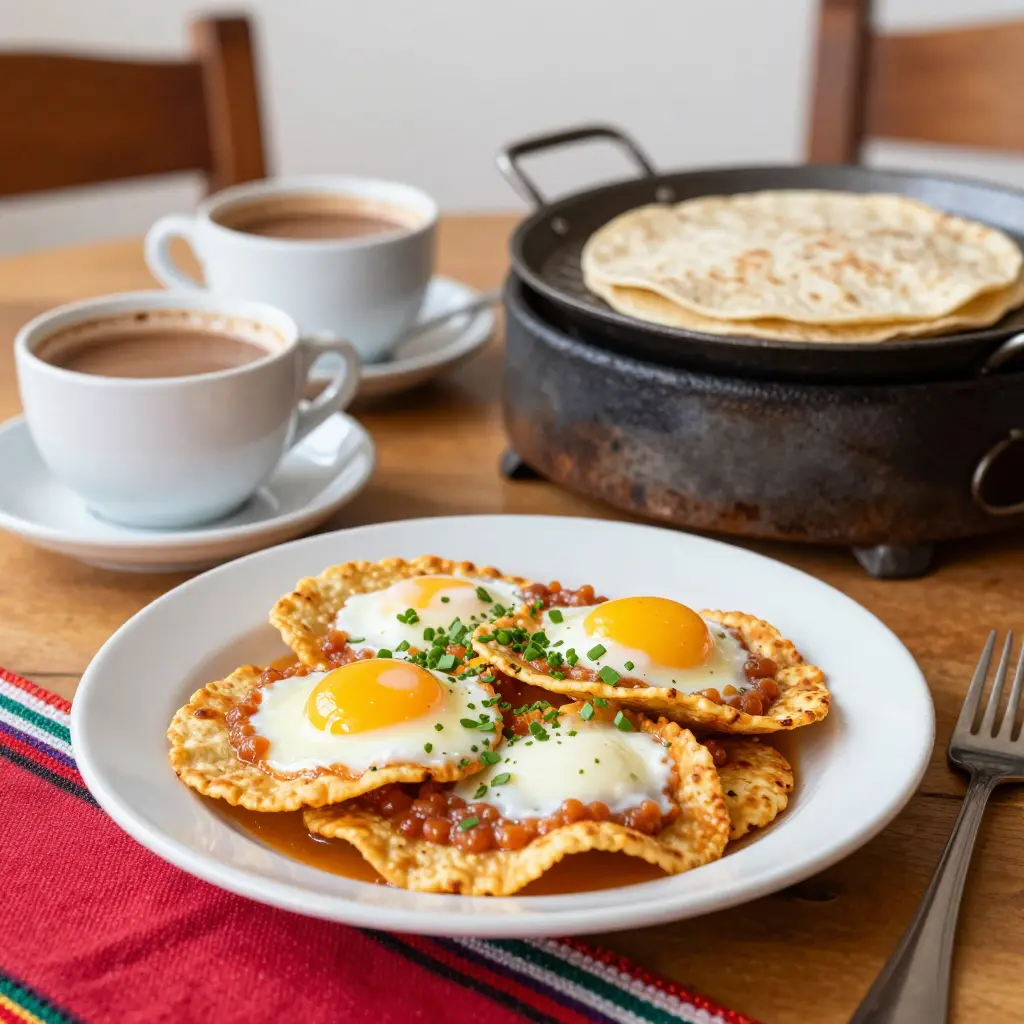
El Canelo Breakfast: A Traditional Mexican Breakfast Worth Waking Up For
A traditional Mexican breakfast comes down to balance: chilaquiles sharp with chile and tomatillo, cafe de olla warm with cinnamon, fresh tortillas soft enough to fold. El Canelo breakfast puts all three on the table at once, which is one reason it is a good way to start a morning in Southern California.
The dishes are the easy part. Chilaquiles are fried tortilla pieces simmered in salsa until they soften at the edges, usually served with eggs and finished with crema and queso fresco. Cafe de olla adds cinnamon, piloncillo, and an earthy sweetness a latte cannot imitate.
Timing changes the meal more than anything else on the menu. Arrive around 10am and the pace is different: the breakfast rush has thinned out, the salsas have had time to come together, and no one is waiting for your table while you finish a second cup.
At El Canelo, 10am sits in the middle of the breakfast window. Late enough to miss the rush, early enough that the kitchen is still cooking at full speed.
Chilaquiles: The Heart of a Mexican Breakfast
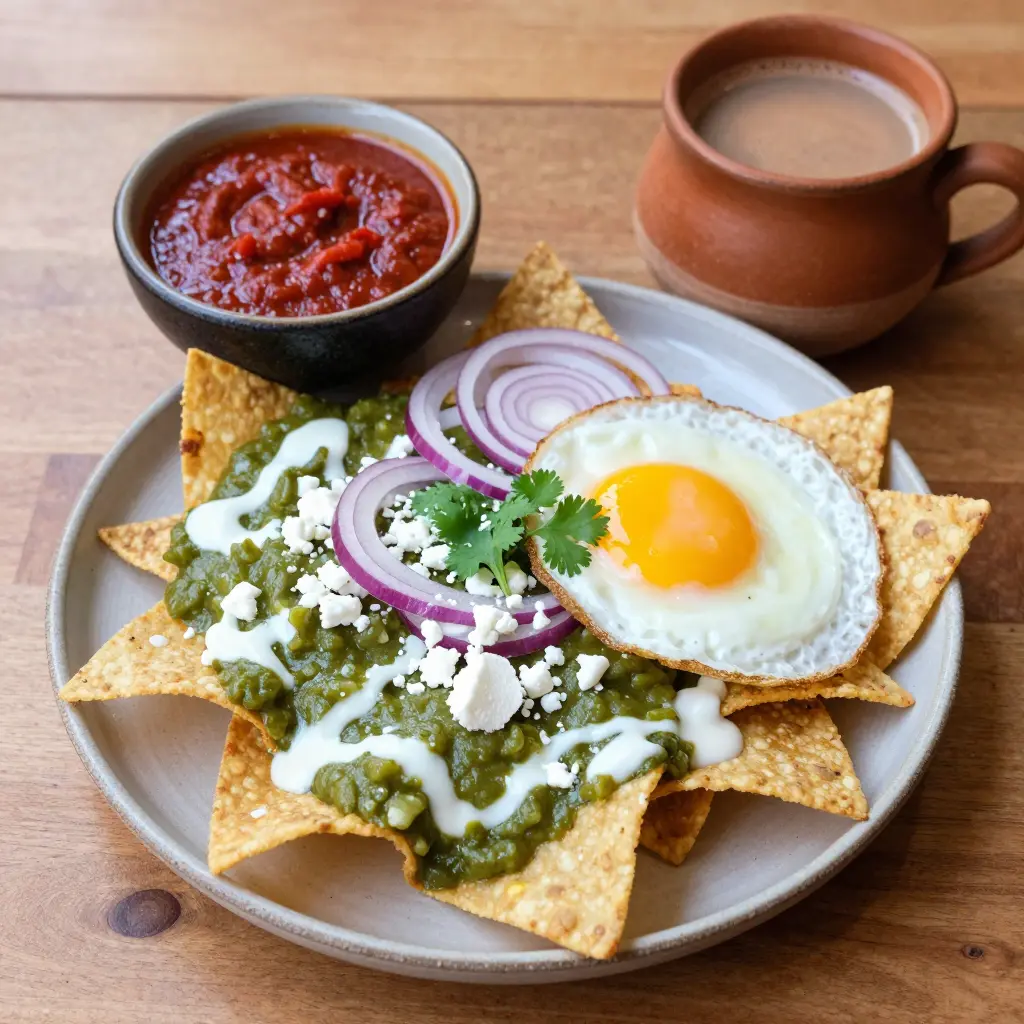
Chilaquiles are the dish most people picture when they think of a Mexican breakfast. Fried tortilla pieces go into salsa and simmer just long enough to soften at the edges while the centers keep some snap. One plate gives you crunch, chile heat, cream, and salt: messy, but the kind of mess that tastes like comfort.
Rojos vs. Verdes
Rojos or verdes is the decision every table has to make. Chilaquiles rojos are built on dried chiles such as guajillo and chile de arbol: earthy and a little sweet up front, with a warm burn that builds at the back of the throat. Chilaquiles verdes are brighter and tarter, thanks to tomatillos and green chiles. Neither is “better”; it depends on whether you want something rich or something sharp. Verdes follow the same logic as a Veracruz-style kitchen, where citrus and fresh salsa do most of the work.
The Toppings Do the Heavy Lifting
The salsa holds the dish together, but the toppings give it character. A spoonful of cool crema cuts the heat and contrasts with the chips. Crumbled queso fresco adds salt and a milky texture that softens against the warm salsa; it does not melt the way a melting cheese would. Raw onion adds bite, and fresh cilantro wakes everything up.
Eggs are the classic addition: fried, scrambled, or over easy, with a runny yolk that works like a second sauce. You can also add shredded chicken, chorizo, or carne asada. A Michoacan-style menu shows how regional Mexican cooking layers flavors like these.
What to Look For When Ordering
- Chips coated in salsa but not soaked through, with some soft pieces and some that still crunch.
- A salsa with real chile flavor, not just heat.
- Generous crema and queso fresco, added fresh rather than baked in.
- A fried egg or a protein add-on if you want the plate to hold you until lunch.
Good chilaquiles slow you down, and you scrape the plate wishing there were more.
The table below lines up the main pieces of the El Canelo breakfast and the window where each one is at its best.
| Item | Typical Serving Style | Best Enjoyed At (time window) | Flavor Profile | Practical Consideration |
|---|---|---|---|---|
| Chilaquiles (rojos) | Chips simmered in red salsa; egg, crema, queso fresco on top | 8:00 – 10:00 a.m. | Smoky, tangy, mild-to-medium heat | Softens quickly; eat soon after it lands |
| Chilaquiles (verdes) | Chips in green tomatillo salsa; egg, crema, onion | 8:00 – 10:00 a.m. | Bright, tart, herbaceous | Holds its zip a little longer than rojos |
| Cafe de olla | Hot in a clay mug (jarrito), sweetened with piloncillo | 7:30 – 9:30 a.m. | Sweet, spiced, cinnamon-forward | Best sipped early; settles as it cools |
| Fresh tortillas | Stacked warm in a cloth-lined basket, made to order | 8:00 – 10:30 a.m. | Soft, warm, lightly corn-sweet | Peak texture in the first few minutes |
| Tortilla warmer | Insulated container or cloth-lined basket holding tortillas | 8:00 – 11:00 a.m. | Neutral; preserves warmth and steam | Keeps tortillas pliable but can steam-sog |
Cafe de Olla: The Warm Mug That Belongs Next to Your Chilaquiles
Cafe de olla is the other half of the meal. It starts with coarsely ground coffee simmered slowly in a clay pot, an olla de barro, with cinnamon sticks and piloncillo, the unrefined cane sugar that gives the drink its caramel depth. The clay matters: it adds an earthy note a drip machine will not reproduce.
The result is a cinnamon coffee that drinks gentle rather than sharp, sweet without turning syrupy, and fragrant enough to fill a kitchen. Poured hot into a small mug, it announces breakfast before the first sip.
Those flavors make cafe de olla a natural partner for a plate of chilaquiles:
- Warm cinnamon spice that softens the edges of a tangy salsa
- Mellow caramel sweetness that tames the heat of roasted chiles
- A smooth body that does not compete with the fried tortillas
- A gentle roasted finish that lingers without turning bitter
Chilaquiles arrive savory and a little spicy, with crema and cheese adding richness on top. A sip of cafe de olla cools the palate and resets each bite, so the last chip tastes as good as the first. The two get ordered together for that reason. Kitchens across Mexico treat the pairing as routine, and you can find the same approach at an Oaxacan restaurant, where coffee and breakfast get the same attention as the rest of the menu.
If you order chilaquiles, order a mug of cafe de olla with them.
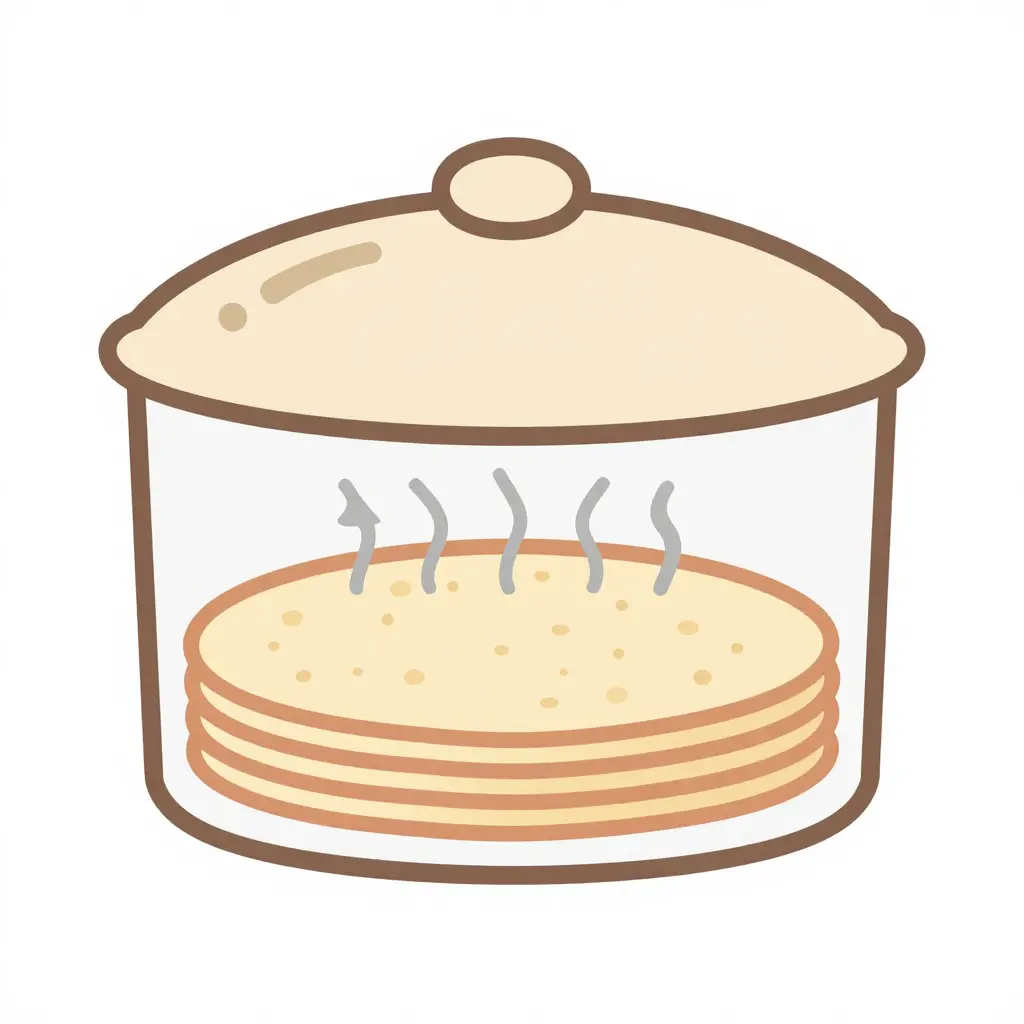
A cross-section of a tortilla warmer: a lid seals the top, a stack of tortillas sits inside, and trapped warm air circulates around them until you open it.
The Tortilla Warmer Problem at 10am
You sit down at 8:30, order chilaquiles and a cafe de olla, and the first basket of tortillas arrives warm and soft. By 10am the same warmer is working against you. The breakfast rush is over, the kitchen has moved on to lunch prep, and the tortillas in the basket feel closer to leather than food.
This is the tortilla warmer problem, and it comes down to moisture. A warmer traps heat, which is the point, but trapped heat plus time produces steam, and steam goes somewhere. Sealed in, it condenses and soaks the bottom of the stack. Let out too freely, it takes the moisture with it and the tortillas dry out and stiffen. Either way the clock, not the warmer, is what ruins them.
By 10am the warmer has usually been topped off several times. Fresh tortillas sit on older ones, the stack keeps breathing, and the texture turns uneven: what was perfect at 8:15 can be rubbery two hours later. Good tortillas bend without cracking and taste of corn, not steam.
To tell whether a warmer is doing its job, check these:
- Even, gentle steam when you lift the lid, not a heavy cloud or bone-dry air with none at all
- Tortillas that fold softly without cracking or snapping at the edges
- No soggy patches at the bottom of the stack and no dry, curling rims either
- Steady temperature, warm to the touch but never hot enough to turn them tough
- A fresh corn aroma rather than a flat, damp, leftover smell
- Consistent texture from the top of the stack to the bottom, not soft on top and brittle underneath
None of this is a knock on any one kitchen. Keeping tortillas hot through a long breakfast service is hard, and the difference between a good basket and a bad one usually comes down to timing and how often someone refreshes the stack. For anyone after a solid El Canelo breakfast, the warmer matters as much as the salsa.
The chart below traces the decline across a morning. It is a rough warmth-and-flexibility estimate, not a lab measurement.
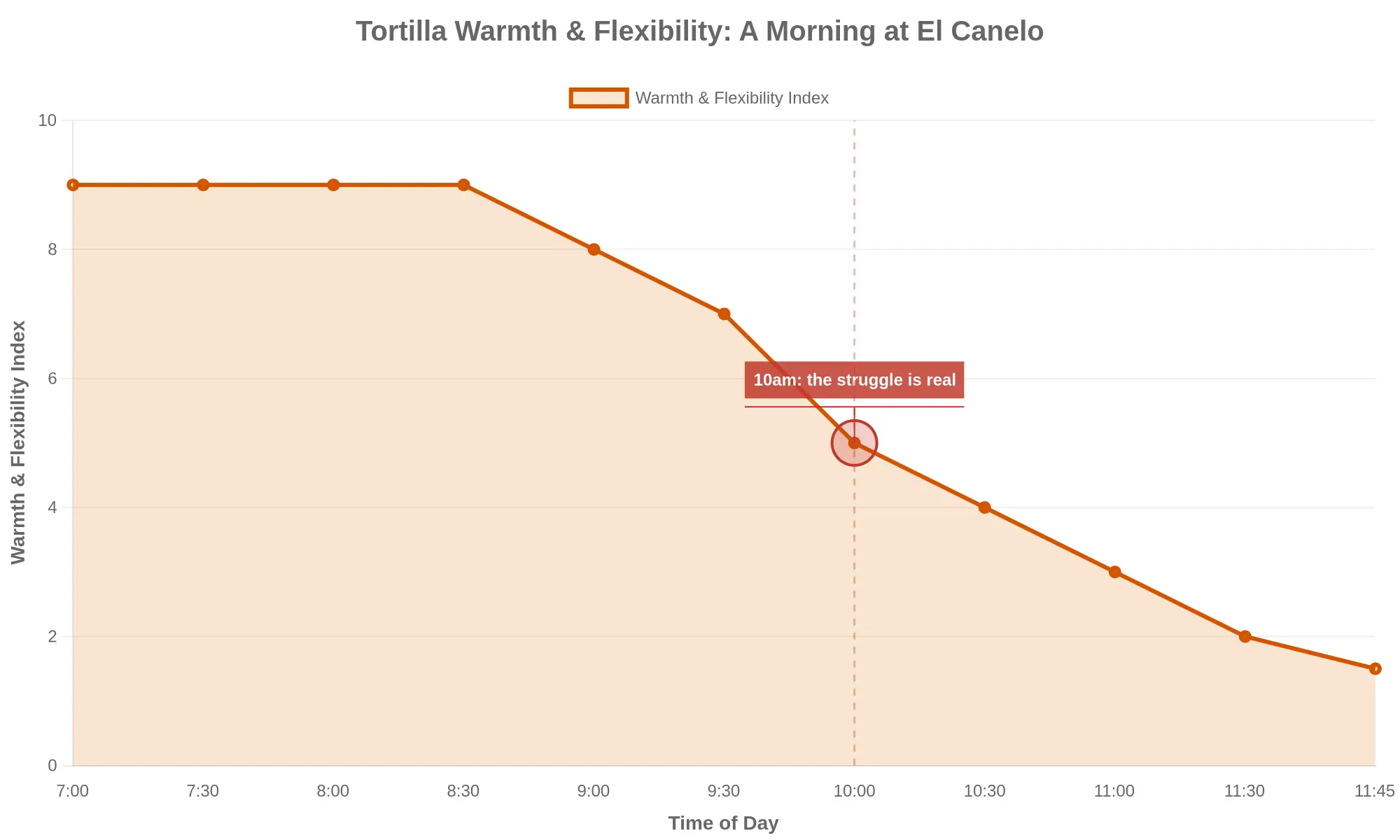
The line holds through the early rush and then drops sharply around 10am, where a tortilla stops folding around your eggs and starts cracking when you try.
What’s actually happening at 10am
- The stack gets low. By 10am the morning’s fresh batch has been picked over, leaving the older tortillas at the bottom of the warmer.
- The lid keeps opening. Every time a server or a diner lifts the lid, heat escapes and never fully comes back.
- The clock works against you. Tortillas lose moisture fast once they cool, and corn tortillas in particular go from tender to tough in what feels like minutes.
- The rush shifts. The 8am crowd is gone, the warmer isn’t restocked as often, and the heat slowly leaks away.
How to beat the 10am slump
If you run a tortilla warmer at home, warm in smaller batches, restock more often, and keep a slightly damp paper towel or clean cloth in the warmer to trap steam. As a diner, ask for a fresh batch when the stack looks tired. Nobody at a good taqueria minds, and it makes an obvious difference on the plate.
A rigid tortilla at 10am is not your imagination; it is the warmer losing its grip on the stack. If tortillas matter to you, come earlier or ask for a fresh batch. The chilaquiles and the coffee will still be at their best around 10.
Tortilla Warmer Buying and Use Guide
You do not think about a tortilla warmer until you have been handed a cold, stiff tortilla. If you cook Mexican food at home, a decent one keeps every taco, quesadilla, and breakfast plate worth eating. What follows is what to look for and how to use it.
Why the Right Warmer Matters
Corn tortillas dry out and turn leathery within minutes of leaving the comal. A warmer traps heat and a little steam, so they stay soft and pliable instead of cracking when you fold them.
The same logic applies when you eat out. A restaurant that sends out chilaquiles with a warm stack of tortillas is paying attention to details, and that is part of what makes a solid El Canelo breakfast work.
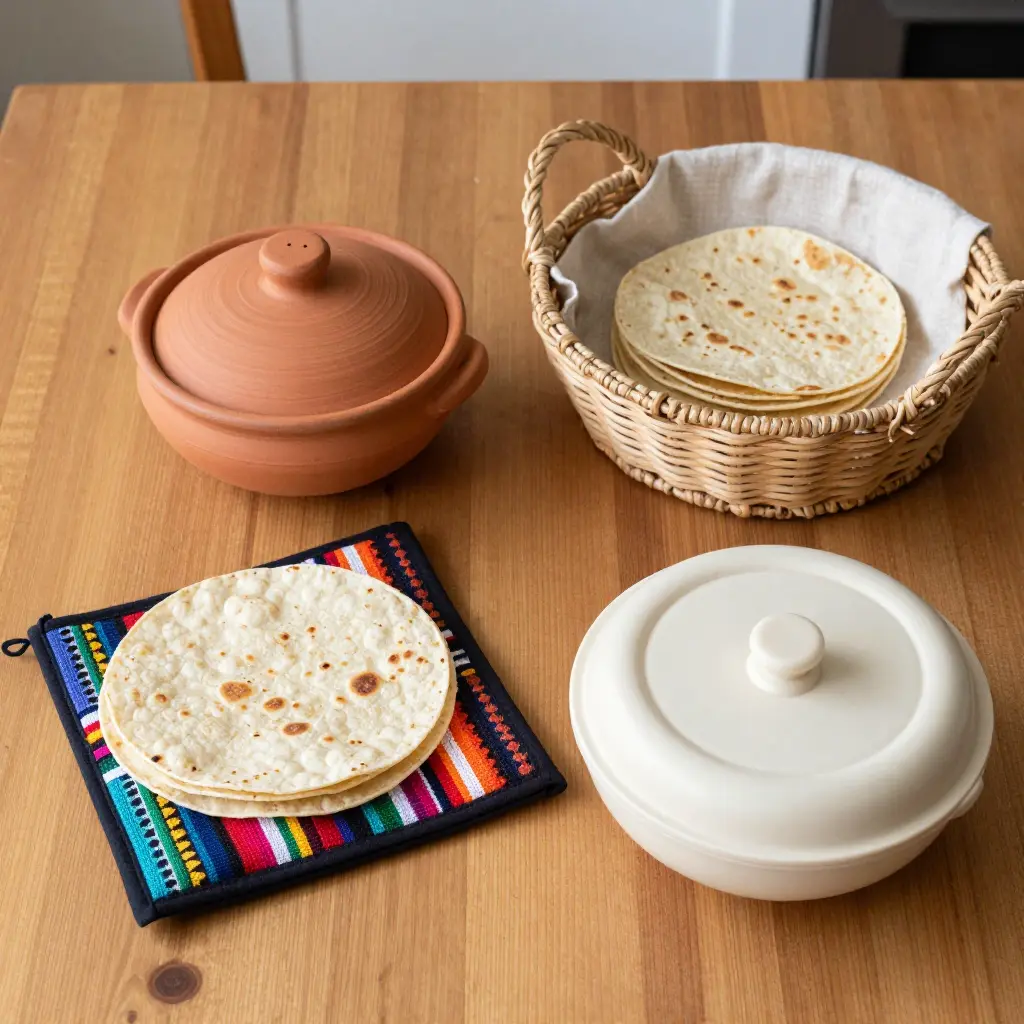
The Four Main Material Types
| Warmer Type | Heat Retention | Best For | Care |
|---|---|---|---|
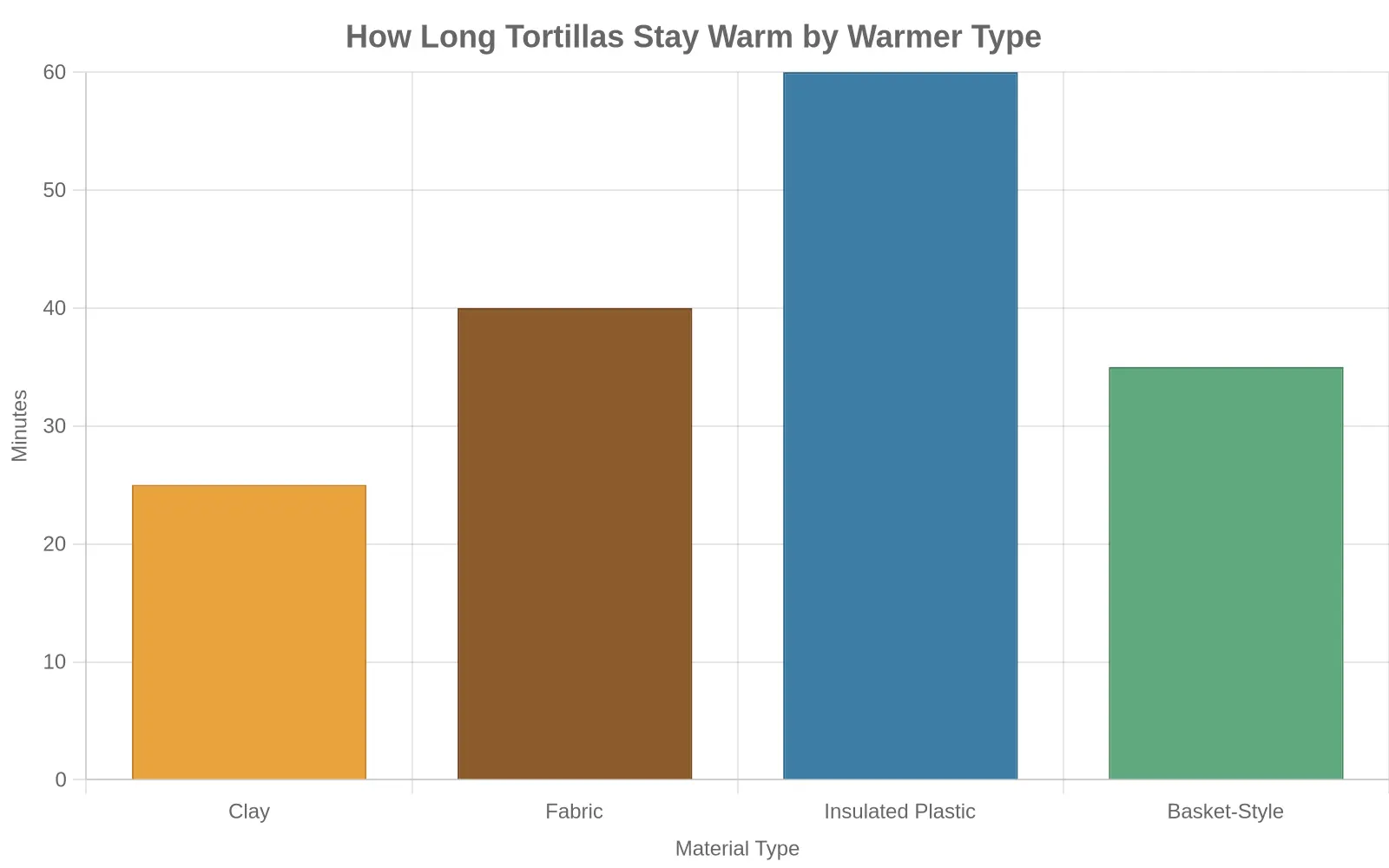
| Clay | Moderate – needs preheating | Authentic presentation | Hand wash, cool before soaking |
| Fabric | Good – insulates well | Small households, table serving | Machine washable |
| Insulated plastic | Best – longest hold | Big families, parties | Dishwasher safe |
| Basket-style | Fair to good – with a cloth liner | Gifting, rustic tables | Wipe or wash liner |
Clay Tortilla Warmer
A clay tortilla warmer is the traditional pick. Warm the unglazed base in the oven, stack tortillas inside, and the porous clay releases gentle steam. It looks good on the table and keeps tortillas soft without drying them.
The catch is fragility. Clay chips if you drop it, and it needs slow, even heating. Never go straight from the fridge to a hot oven.
Fabric Tortilla Warmer
A fabric tortilla warmer is an insulated pouch with a quilted lining. It is light, cheap, microwave-friendly, and easy to wash. It will not keep tortillas hot for an hour, but for a weeknight dinner it holds heat fine.
Insulated Plastic
Insulated plastic warmers, often sold as tortilla keepers, use a double wall to trap heat and stack neatly. Preheat the insert, load the tortillas, snap the lid on. They win on heat retention and lose on looks.
Basket-Style
Basket-style warmers pair a woven basket with a cloth liner or napkin. They are charming and work for chips or bread too. Heat retention depends almost entirely on the liner, so add a thick towel underneath.
How the Materials Compare on Warmth
The difference in hold time is bigger than most shoppers expect.
Capacity: How Big Do You Need?
Most warmers list capacity in tortilla count. As a rough guide:
- 6 to 8 tortillas for two people or a small taco night.
- 10 to 12 tortillas for most families.
- 15+ tortillas for parties, though they are bulky to store.
Measure your usual serving first. Wasting cabinet space on a giant warmer you use twice a year isn’t worth it.
Cleaning and Care
- Clay: wipe clean, avoid soap soaking, and let it dry fully before storing.
- Fabric: machine wash on cold, air dry so the lining stays fluffy.
- Plastic: most are dishwasher safe on the top rack.
- Basket-style: hand wash the liner; never submerge the basket.
If you eat out often, you can judge a kitchen by its tortillas. Places serving fresh, warm stacks, like this El Cerrito taqueria, tend to get the small details right.
5 Steps to Keep Tortillas Warm at Home
- Preheat your warmer (oven for clay, microwave insert for plastic).
- Wrap tortillas in a clean, slightly damp towel.
- Stack them inside the warmer and close the lid.
- Serve from the warmer and keep the lid shut between passes.
- Reheat gently in small batches instead of adding cold tortillas to a hot stack.
Picking the Best Tortilla Warmer for You
There is no single best tortilla warmer, only the one that fits your kitchen. Want traditional style? Go clay. Want dishwasher-friendly convenience? Choose insulated plastic. Feeding a crowd? Prioritize capacity and heat retention. Cooking for two? A simple fabric warmer does the job for a few dollars.
Match the material to your habits, keep it clean, and taco night gets a little better.
What Does a Real El Canelo Breakfast Look Like?
Here is how breakfast orders split across the menu on a typical morning. Chilaquiles and cafe de olla anchor the meal, but the tortilla warmer still shapes how it goes.
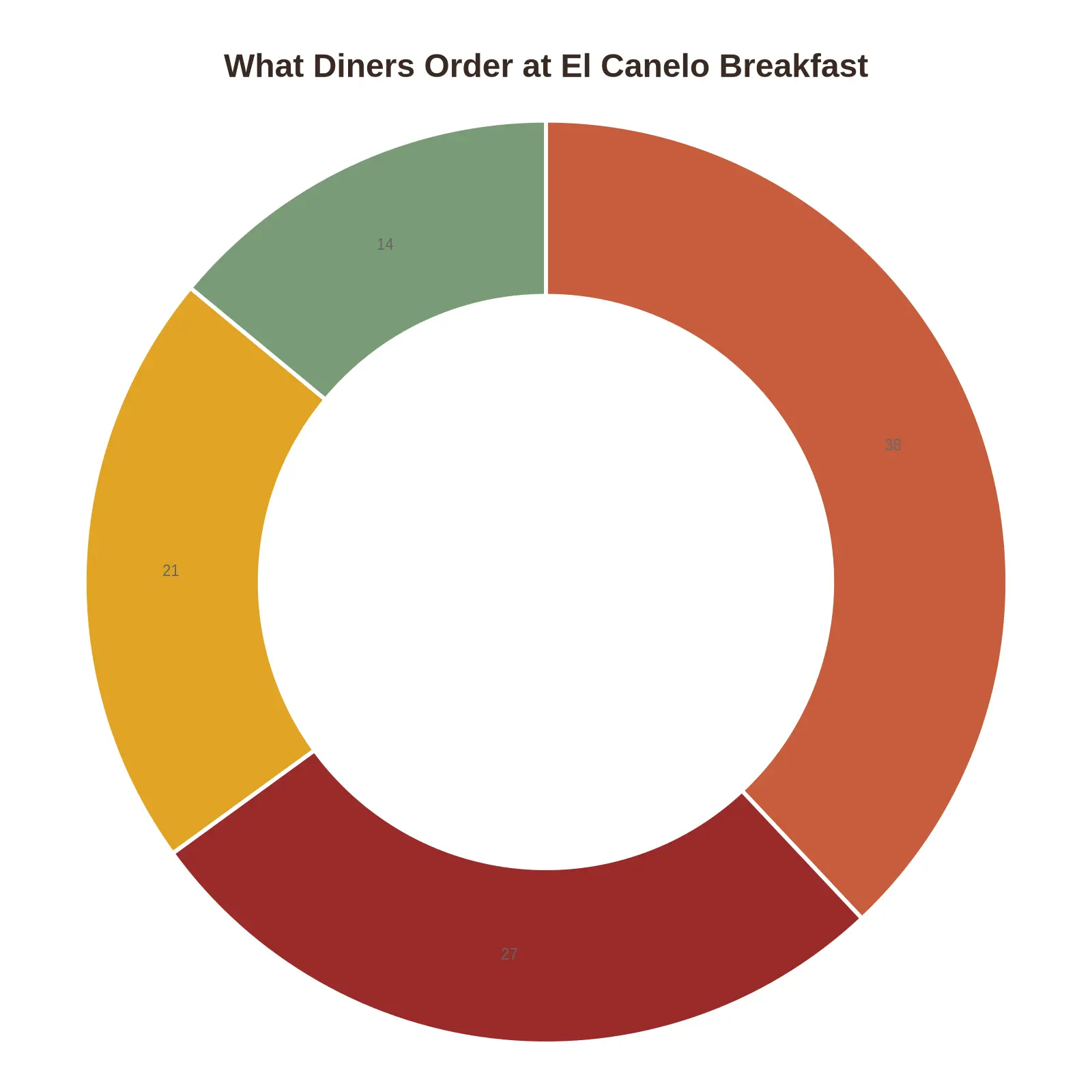
Chilaquiles lead at 38% of orders, followed by a mug of cafe de olla (27%). Fresh tortillas account for 21%, and other breakfast items make up the remaining 14%. Chilaquiles and cafe de olla together are about two-thirds of what comes out of the kitchen, and plenty of those orders include both.
Frequently Asked Questions About El Canelo Breakfast, Chilaquiles & More
What time is best to eat chilaquiles at El Canelo?
Around 10am. The early rush has thinned out, the kitchen is still cooking at full speed, and the chilaquiles come out hot with chips that are crisp rather than soaked. Come much later and you are eating from the bottom of the batch.
What is cafe de olla made with?
Ground coffee, piloncillo (raw cane sugar), and cinnamon, sometimes with clove or a strip of orange peel. It simmers slowly in a traditional clay pot, which is where the earthy, gently sweet flavor comes from.
Why do tortillas get hard in a warmer?
Steam and trapped moisture. When tortillas sit in a sealed warmer too long, the condensation soaks them, and they stiffen once that moisture evaporates. Warmers work best when you pull tortillas out promptly instead of letting them sit.
How do I keep tortillas warm at home?
Wrap a small stack in a clean, slightly damp kitchen towel, then tuck them into a tortilla warmer or a covered bowl. You can also warm them on a dry comal or skillet for about 30 seconds per side, then keep them covered until everyone is ready to eat.
Are chilaquiles rojos or verdes better?
There is no wrong answer. Rojos bring a deeper, smokier tomato-chile flavor; verdes stay brighter and tangier thanks to the tomatillos. Rojos work well with eggs, verdes with shredded chicken. Order both and decide for yourself.
Do I need a tortilla warmer to enjoy good chilaquiles?
No, but it helps more than people expect. A warmer keeps your tortillas soft enough to fold, so you are not fighting one mid-bite. If you eat Mexican food at home often, it is an inexpensive upgrade, and a good companion to the chilaquiles and cafe de olla in our El Canelo restaurant guide.
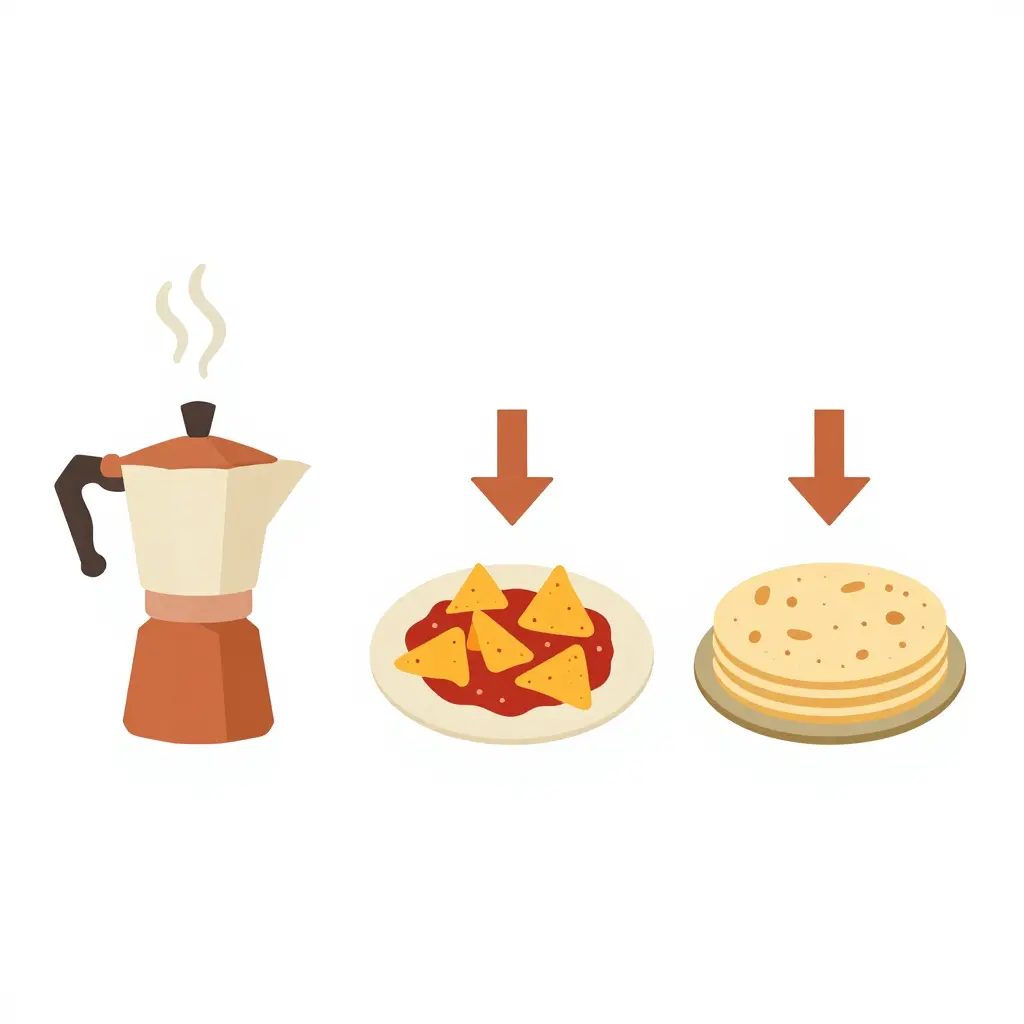
A quick visual recap of how a classic Mexican breakfast comes together – cafe de olla brewing, chilaquiles plated, and tortillas warmed and served fresh.