
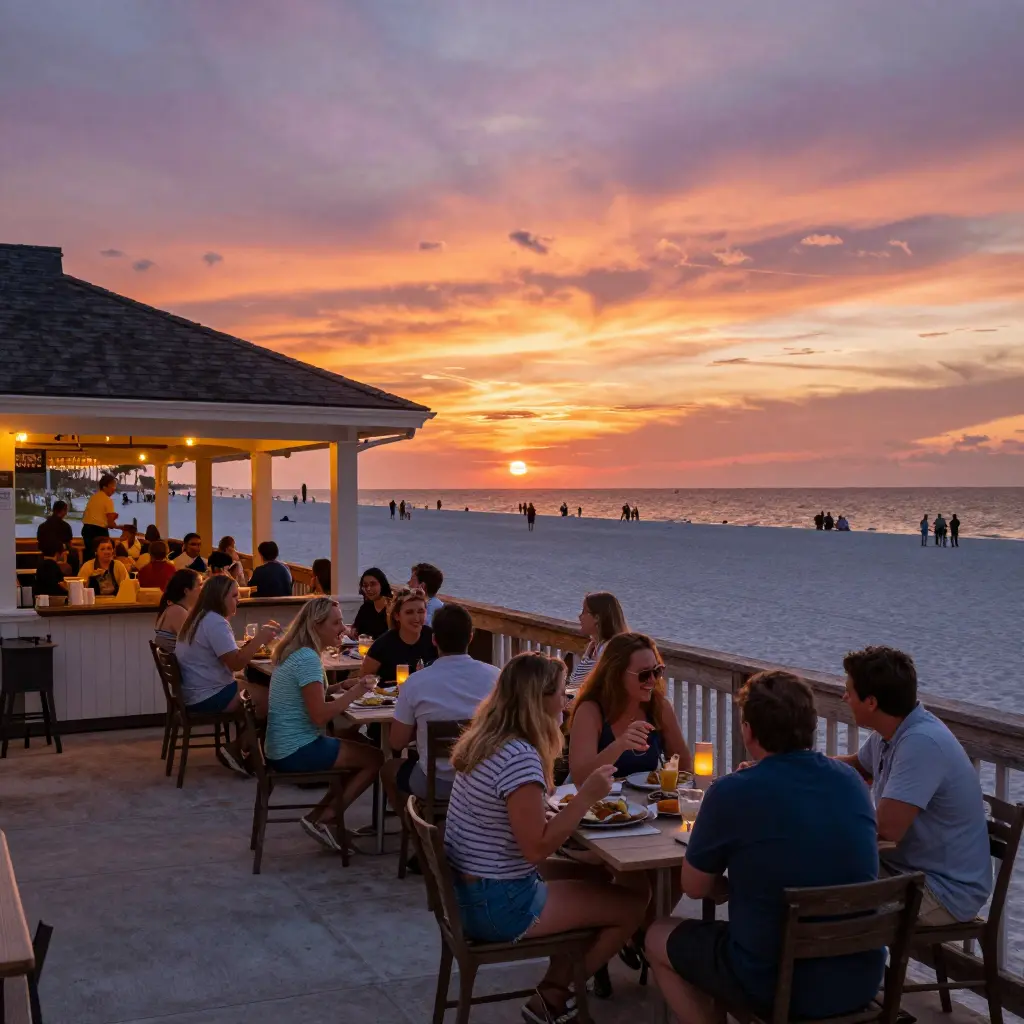
Discovering Pass-a-Grille Restaurants: Your Waterfront Dining Guide
Pass-a-Grille sits at the southern tip of St. Pete Beach, a compact grid of streets with the Gulf of Mexico on the west side and Boca Ciega Bay on the east. The restaurant strip is short: kitchens along Gulf Way and Pass-a-Grille Way, plus the bars and cafés clustered around 8th Avenue.
Almost everything here runs on the sunset. The sun drops straight into the Gulf, and the dinner crowd moves with it. Get the timing wrong and the evening becomes circling for parking and waiting on a pager. Get it right and the same meal is easy.
What follows covers the three things that decide most Pass-a-Grille dinners: when to arrive, where to leave the car, and what to order once you are seated.
The range is wider than the village size suggests, from barefoot beach bars to serious seafood kitchens of the kind that hold their own against the standout American restaurants people travel for elsewhere.
Understanding the Sunset Rush
The sunset rush is the daily surge of diners who arrive within roughly 90 minutes of sundown. Pass-a-Grille faces west across open water, so nothing blocks the view and everyone is watching the same clock. Instead of a dinner service spread across the evening, restaurants get a short, heavy burst of arrivals.
Why Crowds Spike as the Sun Drops
Sunset is a deadline people can see coming, so they plan dinner around it rather than around appetite. A group that would normally eat at 7 p.m. on a Tuesday aims to be seated by 6:15 to catch the light. Enough people make that same call and the arrivals bunch into a narrow band.
The General Arrival Pattern
On a typical evening the traffic comes in three waves:
- Early: 75 to 90 minutes before sunset, when there is still room and the kitchen is not yet slammed.
- Peak: 30 to 60 minutes before sunset. Waits climb fastest here.
- Late: at or just after sundown, when walk-ins start betting on tables turning over.
How Seating, Wait Times, and Walk-Ins Shift
At the peak, hosts usually stop promising a particular table and seat guests first-available. That fills the room faster, but you lose any say in where you sit. A wait that was near zero at 5 p.m. can reach 45 or 60 minutes by 5:30. Walk-ins take the worst of it: arrive at the peak without a reservation and you join a list; arrive 40 minutes later and you often walk straight to a table as the first wave leaves.
| Arrival Window | Typical Wait | Seating Outlook |
|---|---|---|
| 90+ min pre-sunset | 0-10 min | Wide open, choice of tables |
| 60-90 min pre-sunset | 15-30 min | Filling up, mixed availability |
| 30-60 min pre-sunset | 45-60 min | Peak crunch, first-available only |
| At/after sunset | 10-25 min | Second wave turning over |
Those wait ranges are a rough guide from a typical evening, not measured averages, and they shift with the season and the night. The point stands: be on one side of the rush or the other. Come early, or come after the sun is down, and the same restaurants feel calm. If you are still choosing where to eat, these beachside dining options let you compare by timing.
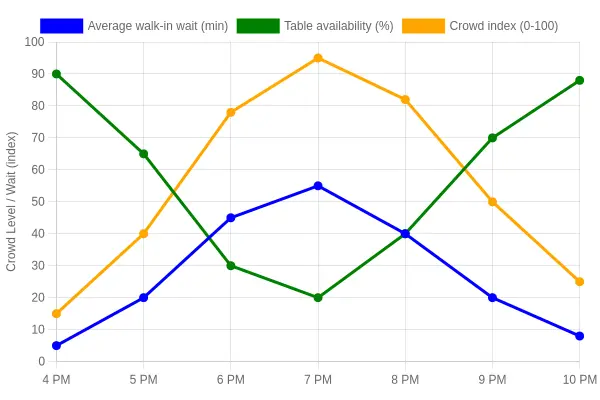
Waits and the crowd index both spike right before sunset, when table availability bottoms out. The exact hour moves with the season — nearer 5:30 p.m. in December, nearer 8 p.m. in June — but the shape of the evening does not change. Arrive ahead of the rush, or wait until the beach crowd clears.
The Rush Is Predictable — Plan Around It
Beating the sunset rush is less about luck than about schedule. The wave arrives in roughly the same 90-minute window almost every night, and it is chasing the same view. Do not try to outrace it; get ahead of it. Decide your arrival time before you leave the house and the evening is mostly settled.
Arrive Before the Peak, Not During It
Crowds build about an hour before sunset and linger well past it. Arriving 60 to 90 minutes early, or waiting until full dark, means you are seated while everyone else is still hunting for parking.
| Arrival Window | Crowd Level | Best For |
|---|---|---|
| 60-90 min before sunset | Low to moderate | Easy seating, relaxed pace |
| The sunset hour | Peak | Best avoided |
| 45+ min after sunset | Low | Quiet, unhurried dining |
Reservations and Call-Aheads
Not every restaurant here takes reservations, so call before you drive over. Two questions do most of the work: do you hold tables through sunset, and how early do I need to book? Even at walk-in-only places, a quick call usually tells you the calmest hour to show up. If you want a spot that handles both reservations and walk-ins, this popular dining destination is a reasonable starting point.
The Case for an Early or Late Dinner
An early dinner, around 4:30 to 5:30, gets you in before the wave forms at all. A late dinner, an hour or more after sunset, trades the crowd for a quieter room and often the same view. Either beats standing near the host stand with a pager.
In Short
The “beat the sunset rush” plan is simple: shift your arrival, not your expectations. Book or show up early, call ahead if you are unsure, and let the crowd fight for the sunset view while you eat.
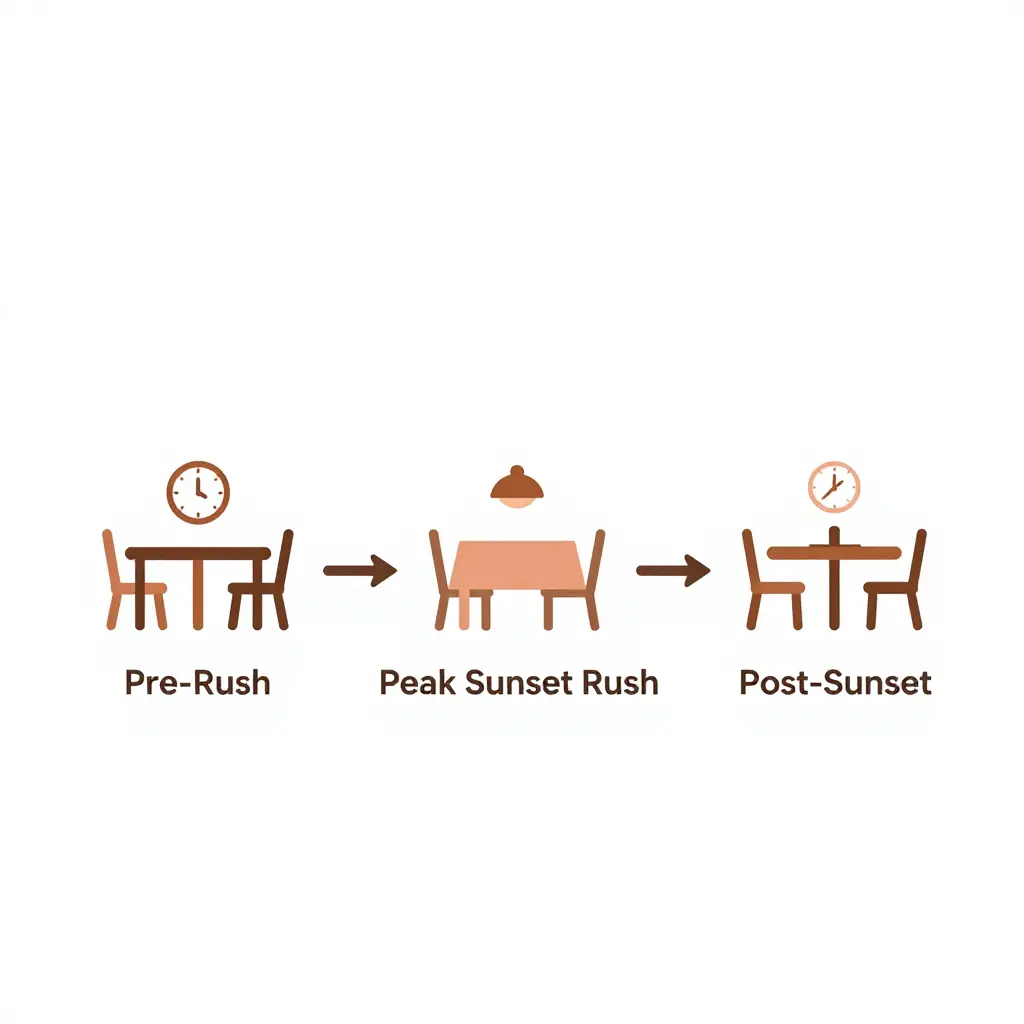
Three stages: before the rush, the peak, and after sundown. Arriving in the first or the third is how you get a table without the wait.
Parking Near Gulf Boulevard: A Pass-a-Grille Overview
Nobody wants to spend the best hour of the evening circling for a space. The people who park easily either arrive before the crowd or leave the car a few blocks from the water. Here is how the parking actually lays out.
The Layout of Gulf Boulevard Parking
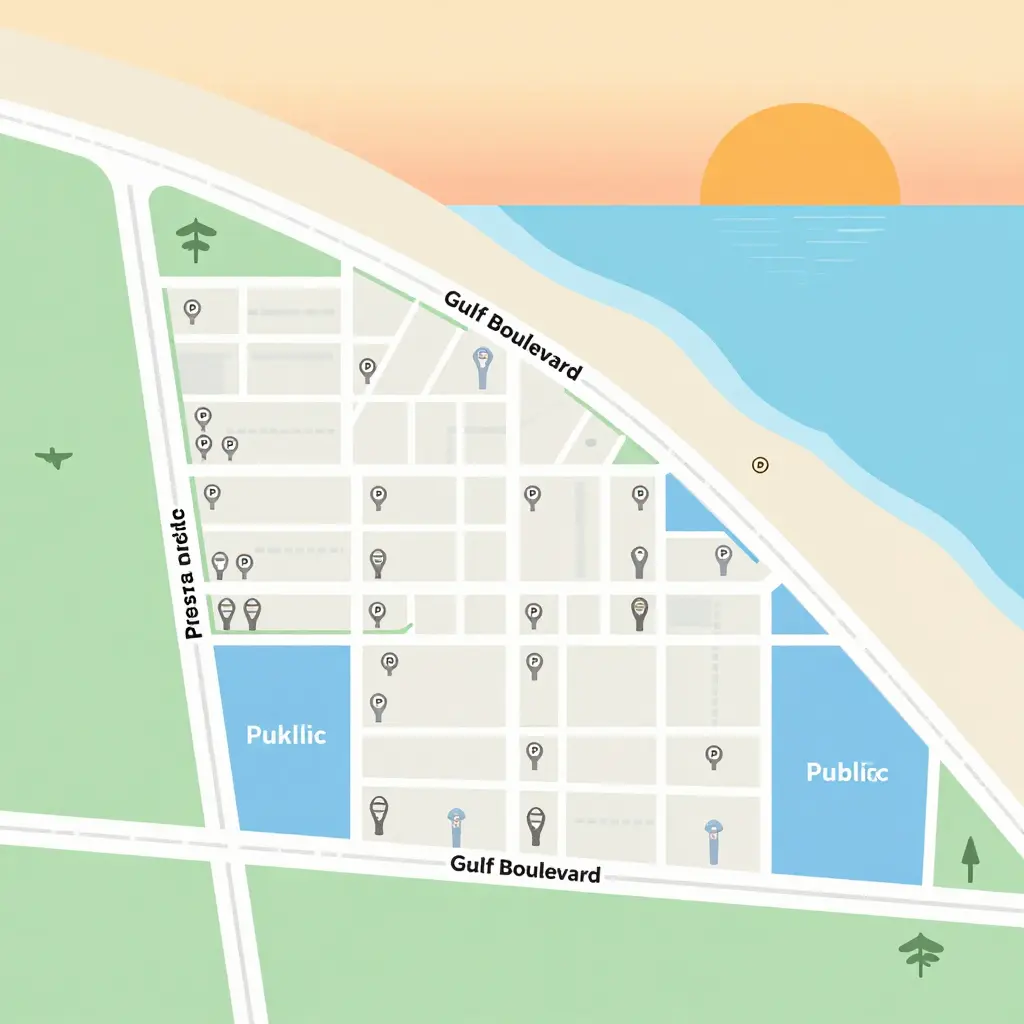
Pass-a-Grille is compact and walkable, so parking is tight rather than sprawling. Two north-south streets carry most of the traffic: Pass-a-Grille Way on the bay side and Gulf Way along the beach. Gulf Boulevard itself ends at the Pinellas Bayway just north of the neighborhood and continues south as Pass-a-Grille Way, which is why the boulevard’s name gets attached to this whole strip. Parallel spaces line both streets, the side streets running to the water add curb space, and a few public lots sit within walking distance of the restaurants. Nothing is more than a few blocks from the sand.
Metered Spaces Versus Public Lots
The two main options behave differently:
- Metered street parking is convenient but limited, and the spots nearest popular entrances go first.
- Public lots are the better bet when you want to stay a while, since they accommodate longer visits near the beach and restaurants.
In short: meters win on proximity, lots win on availability.
Peak Demand Windows
Demand builds through the afternoon and crests at sunset, when beachgoers and diners want the same spaces. Once the sun is down the pressure drops off quickly.
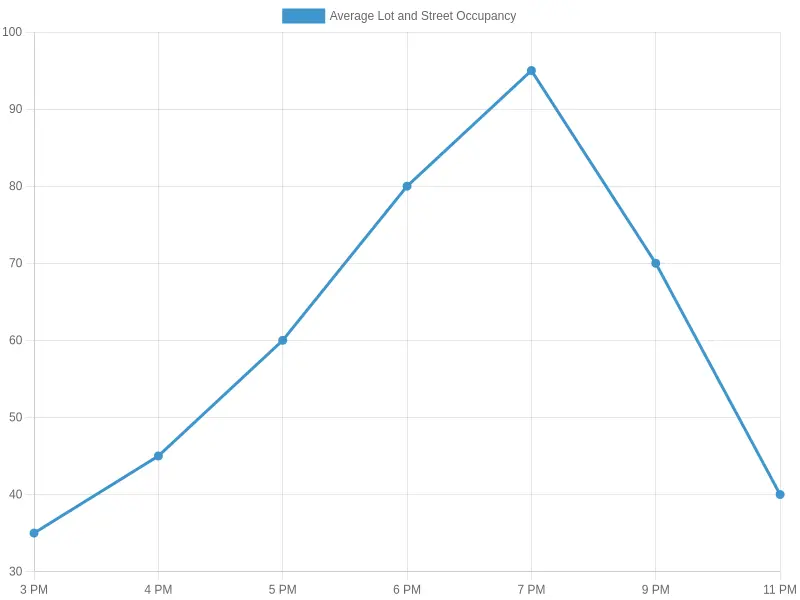
How Parking Shapes the Sunset Rush
Parking feeds directly into the wait. Once the lots and meters fill, people take longer to reach the door, tables turn more slowly, and a ten-minute search for a space becomes a longer wait for a table. A good part of what people call the “rush” is really a parking problem.
What Works
Come before the late-afternoon surge, keep the public lots and side streets in mind, and treat the walk as part of the evening. A little planning gets you to one of the area’s Pass-a-Grille dining spots instead of another lap around the block.
Here is a realistic rundown of the options before you head to the dining strip. The rates and distances below are typical ranges, not posted figures, and they change with the season.
| Parking Type | Typical Cost | Best Time to Find Space | Walking Distance to Dining | Notes |
|---|---|---|---|---|
| Street meter | $1.50 – $3.00/hour | Before 4:30 PM or after 9 PM | 0 – 2 blocks | Meters often max out at 2 hours; bring coins or use the pay-by-app option |
| Public beach lot | $2.00 – $5.00/hour, higher on weekends | Weekday mornings and early afternoons | 1 – 4 blocks | Fills fast near sunset; some lots close or charge event rates in peak season |
| Restaurant valet | $5.00 – $15.00 flat (plus tip) | Any time, reservation recommended | Usually at the door | Limited to partnering venues; call ahead since not every restaurant offers it |
| Residential permit zone | Free for permit holders only | Rarely viable for visitors | 1 – 5 blocks | Non-permit vehicles risk a ticket; respect signage to avoid a citation |
| Private paid lot | $5.00 – $20.00 flat rate | Early evening, 5 – 6 PM | 2 – 6 blocks | Flat daily rates ease the meter hunt; good fallback when everything else is full |
| PSTA trolley / bus | $2.25 regular, $1.10 reduced, $5/day cap | All day, runs into the evening | Nearest stop at 75th Ave & Gulf Blvd, about 3.5 miles north | The Suncoast Beach Trolley ends at 75th Ave and does not enter Pass-a-Grille; plan a transfer or a long walk, and check current schedules first |
During the golden-hour crunch, a plan matters more than luck.
Parking and Timing Tips for Pass-a-Grille
Getting a table is half the battle; parking is the other half. These are the moves that make the difference.
- Arrive before 4 p.m. if you can. The rush builds in the two hours before sunset, so an early arrival means easier parking and a shorter wait at the host stand.
- Read the meter rules twice. Some meters take coins only, others run through apps, so check every sign before you walk away or you risk a ticket.
- Use the public lots a block inland. The paid lots along Pass-a-Grille Way usually have open spaces when the beachfront spots are full, and it is a short stroll to the water.
- Skip the blocks closest to the sand. Those premium spaces fill first, so aim for streets a couple of blocks east instead of circling the same crowded corner.
- Plan one walking route for the whole evening. Park once, then map a loop covering the pier, the shops, and your restaurant so you never move the car mid-visit.
- Time your meal around golden hour. Aim to be seated 30 to 45 minutes before sunset so you can order, relax, and step outside when the sky lights up.
- Keep a little cash handy. A few lots and older meters still prefer bills or quarters, and having change saves a scramble at the wrong moment.
The walk is part of the evening, not a penalty. Arrive early, park a block or two off the strip, and the sunset is something you watch instead of something you miss while circling.
What Locals Actually Order at Pass-a-Grille Restaurants
Tourists order the biggest, most photographed plates. Regulars tend to order the same few dishes week after week, and those repeat orders say more about a kitchen than the menu description does.
The Tourist Favorites (and Why Locals Skip Them)
The showiest items are the ones visitors order most: giant shrimp baskets, frozen drinks in souvenir cups, anything marketed as “jumbo” or “deluxe.” They photograph well. They are also the items that vary most from one kitchen to the next, which is why regulars tend to leave them alone.
The Dishes Regulars Order
The dishes regulars come back for are simpler and easier to do well:
- Blackened grouper sandwich — the Gulf Coast standard; if the seasoning is off, you will know.
- Smoked fish spread with crackers — a common starter and a fair test of the kitchen’s prep.
- Fried shrimp and hush puppies — straightforward comfort food that most places here do well.
- Stone crab in season — Florida’s stone crab season runs October 15 to May 1, so this is a winter and spring order.
Why These Dishes Win
Consistency matters more than spectacle. A grouper sandwich is only as good as the fish in it, and a taqueria lives or dies by its salsa. When a kitchen gets a simple dish right every time, people come back for it. The same logic explains the draw of a neighborhood taqueria, where a short menu done well beats a long one done unevenly.
How to Order Here
Ask the server what the kitchen does best that day and order that, rather than the item with the biggest photo on the menu. Simple dishes with a long run on the menu are usually the safest bet.
How Locals Sequence a Pass-a-Grille Meal
The diagram below shows the shape of a typical local order: one main dish, sides alongside it, and appetizers and dessert as supporting parts rather than the center of the meal.
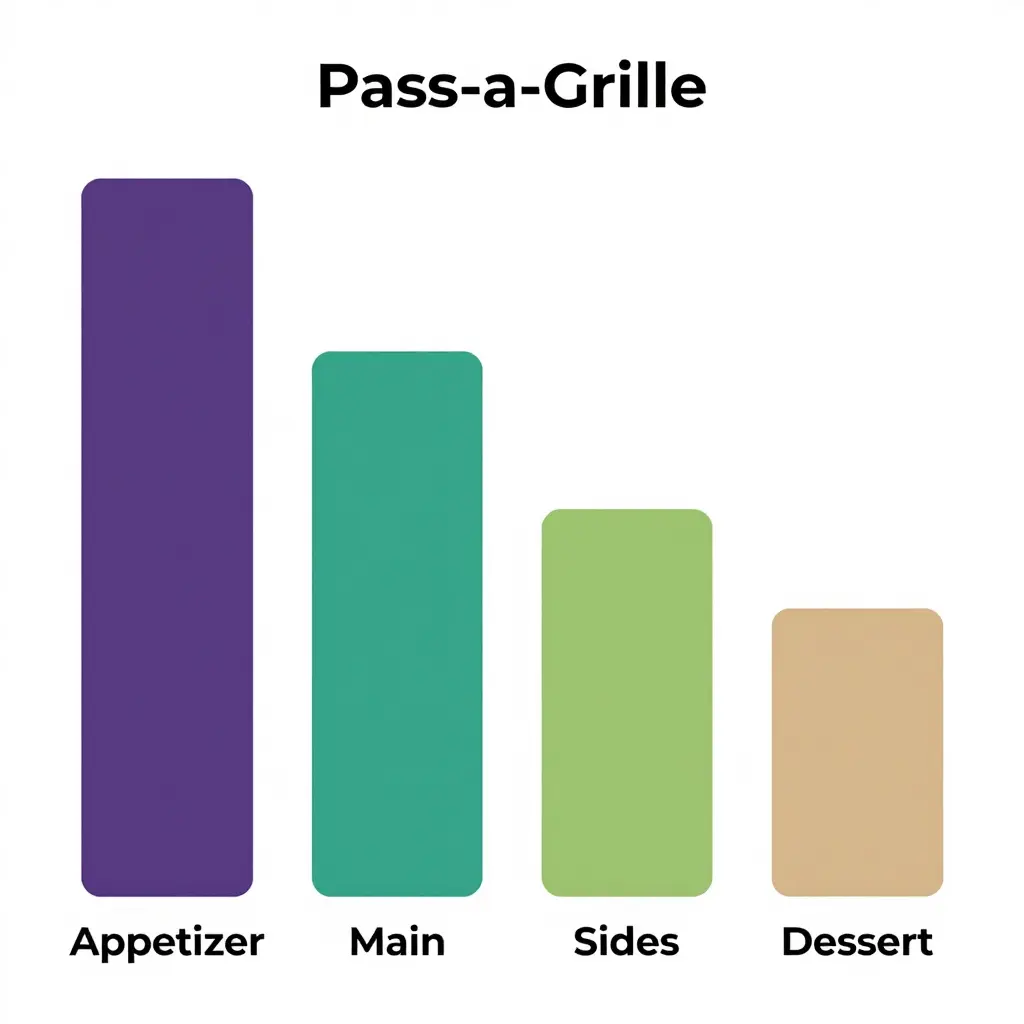
The meal centers on one main dish, with sides, appetizers, and dessert around it — the same pattern behind the menu staples regulars reach for first.
Your Recommended Dining Plan for Pass-a-Grille Restaurants
Time Your Arrival to Beat the Sunset Rush
The common mistake is to arrive right in the middle of the rush, when the patios are full and the wait is approaching an hour. Pick one of two windows instead: an early seating between 4:30 and 5:15 p.m., or a second wave after the sun is fully down. If you want Veracruz-style seafood, arrive before 5 p.m., since that kitchen seats early and fills up.
Lock Down Parking Before You Order
Timing does not help if you are still circling. The parallel spots on Gulf Way and Pass-a-Grille Way, and the side streets off 8th Avenue, turn over fast around golden hour. Make one loop, take the first reasonable metered space, and walk. That is faster than hunting while your reservation clock runs.
Order Like Someone Who Lives Here
Start with something shareable, then order one main dish instead of a combo platter. Slow-cooked carnitas at a Michoacán kitchen is a good opener; a Oaxacan menu of smoky, mole-based dishes works better as a focused order than as a spread. If half your table wants tacos and half wants to try everything, a Spanglish spot covers both.
A Quick Word on Kids and Groups
Families do best at the earliest seating, when kitchens are calm and food comes out fast. Larger groups should call ahead and arrive together; beachside tables are tight. For a quick late bite, a taqueria near the water is the easy finish.
The Short Version
Arrive early, park on purpose, and order one dish the kitchen does well. That is how a sunset dinner here stays relaxed instead of rushed, and it is the same rhythm that makes a meal at El Canelo Restaurant easy to enjoy.
Frequently Asked Questions About Pass-a-Grille Dining
What is the best time to avoid the sunset rush at Pass-a-Grille restaurants?
It depends on the season, because the rush tracks sunset. In winter, when the sun drops around 5:40 p.m., the crunch runs roughly 4:30 to 6 p.m.; in June, with sunset near 8:30 p.m., it runs closer to 7 to 9 p.m. The reliable move is to arrive two hours before sunset or an hour after. That misses the crush in any month.
Where can I find parking near Gulf Boulevard?
Parking near the dining strip fills fast as sunset approaches. The options are metered street spaces on Gulf Way and Pass-a-Grille Way, public lots within a few blocks, and private lots at some restaurants. Arrive 20 minutes before you plan to eat, or take a rideshare, and you skip most of the hassle.
What do locals actually order when they eat here?
Usually the simple dishes: a grouper sandwich, stone crab when it is in season, tacos with slow-cooked fillings. Ask the server what the kitchen does well that day and order that. A straightforward seafood plate, a cold drink, and a seat facing the water is the usual formula.
Do I need a reservation for a weekend dinner?
For Friday and Saturday, yes, especially in winter. Popular places book out days ahead for the sunset hours. Walk-ins can often find a bar seat, but calling ahead gives you control over when you eat.
Is the sunset rush worth fighting, or should I eat later?
Eat early, then walk to Pass-a-Grille Beach for the sunset itself. You get the same view without competing for a table or a space.
Can I find great food beyond the seafood spots?
Yes. The neighborhood is not only seafood. For tacos, El Cerrito Taqueria is a solid casual option. A seafood dinner one night and a taqueria lunch the next covers both sides of the local food scene.